1.0 Overview for Securing OpenText Identity Manager Components
Most organizations have their identity data stored on multiple systems. In this case, managing identities and monitoring user activity on physical and virtual environments are important. OpenText Identity Manager provides an automated environment to synchronize the identity data across multiple connected systems. It also ensures that users have access to the resources required for their jobs. As it creates and stores a lot of user data, ensuring that the data is protected from unauthorized use, access, and modification is important. To protect your data, OpenText recommends a few best practices for deploying and securing the OpenText Identity Manager system.
Figure 1-1 Securing the Product Components between Firewalls
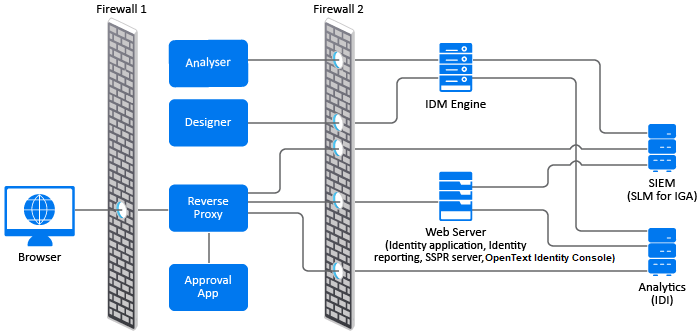
First Firewall: If you place a firewall between browsers and Analyser, Designer, Reverse Proxy, and Approval App, you need to open ports so that browsers can communicate with these components. For more information about ports, see Understanding OpenText Identity Manager Communication.
Second Firewall: The second firewall separates IDM Engine, web servers, SIEM and Analytics Server from Analyser, Designer, Reverse Proxy and Approval App. For more information about security best practices, see Section 2.0, Security Best Practices.